
Travel Guides
What Egypt Looks Like After Dark
Night tourism is having a global moment, and Egypt has always quietly rewarded it — illuminated temples, Nile dinner cruises, and a Khan el-Khalili that feels entirely different by lantern light.
Night tourism has quietly become one of the more deliberate shifts in how destinations plan for visitors. Cities now build light installations, evening museum hours, and after-dark tours specifically because travelers are asking for them — partly to escape daytime heat and crowds, partly because a trip's daylight hours only stretch so far and an evening spent doing nothing feels increasingly like a missed opportunity. What used to be downtime between dinner and bed has become its own travel category, with its own itineraries built around it.
Egypt didn't need to catch up to this trend so much as it already had the raw material for it, sitting mostly untapped for decades. Long before "night tourism" was a phrase anyone used, Egypt was illuminating its temples after sunset, running boats down the Nile past a lit-up skyline, and letting its oldest market come alive exactly as the heat of the day broke. The infrastructure for a great evening in Egypt has been there all along — it's just increasingly the reason people plan around it rather than an afterthought.
The Sound and Light Shows: Temples After Dark
The clearest example is the Sound and Light Show format, staged at both Giza and Karnak. At Giza, the pyramids and the Sphinx are lit in shifting color as a narrated history plays across the plateau, told in the Sphinx's own "voice" as it recounts the millennia it has watched pass. At Karnak, the effect is arguably even more dramatic: visitors walk directly through the temple's colonnades and courtyards after dark, guided by light through a space that during the day is a wide-open sunbaked complex and at night becomes something closer to theater, with columns and statues picked out of the darkness one section at a time as the story moves you forward. Both shows are genuinely different experiences from a daytime visit to the same sites, not simply the same site with the lights off — the ancient monuments read differently in shadow and spotlight than they do in flat midday sun.
A Nile Dinner Cruise Through Central Cairo
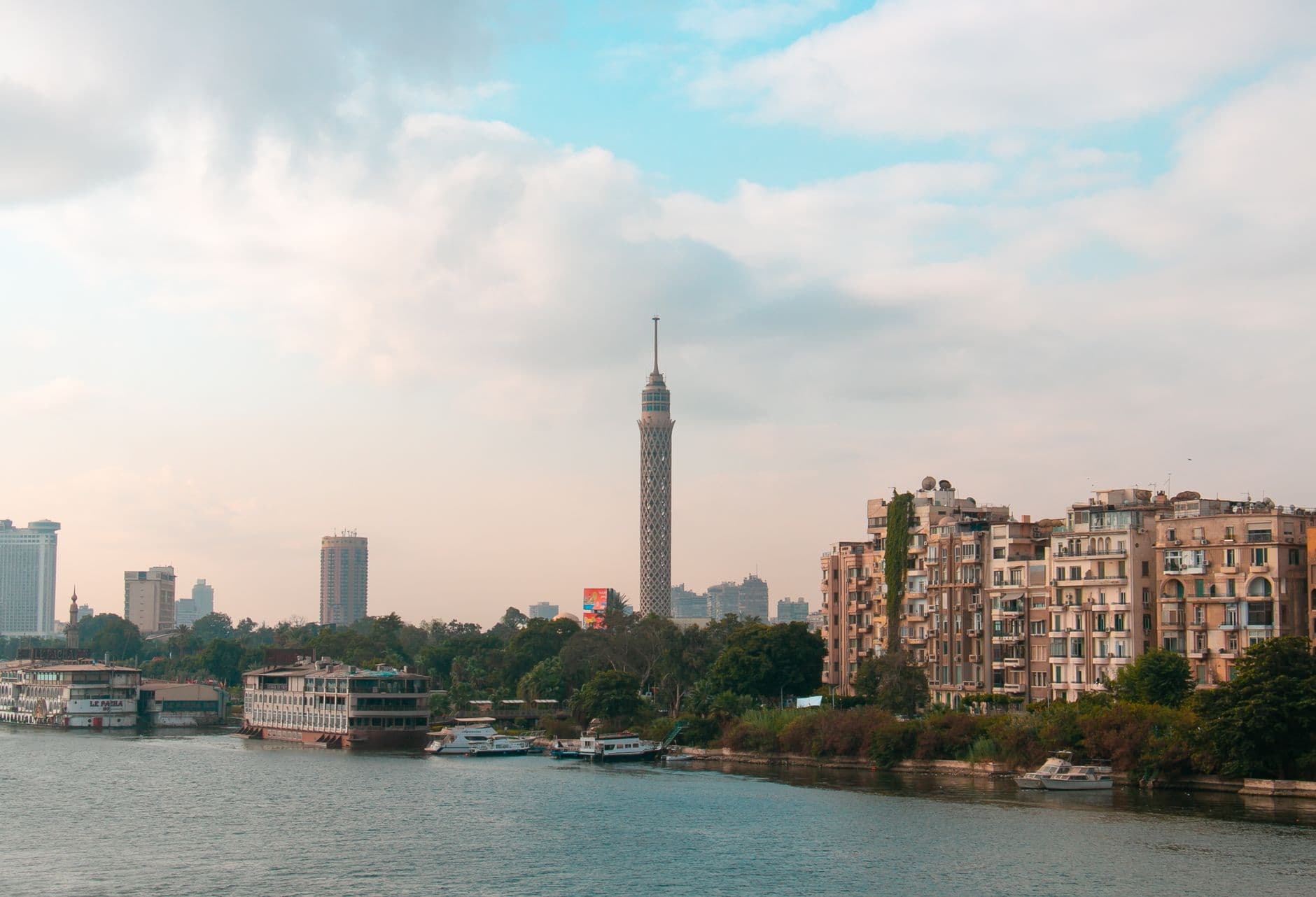
A Nile dinner cruise is the other pillar of an Egyptian evening, and it works on a different register entirely — less about the ancient world, more about the city itself. A boat departs from central Cairo as the sun sets, and the skyline along the riverbanks lights up gradually as the evening goes on: bridges, hotel towers, minarets, the glow of the corniche reflected on the water. Dinner is typically served buffet-style on board, often with a live band and a Tanoura or belly dance performance as part of the evening, while the boat makes a slow loop along the river rather than actually traveling any real distance. It's an easy, low-effort way to build a full evening into a Cairo day that would otherwise end at a hotel restaurant, and it puts you on the water at exactly the time of day the Nile looks its best.
Khan el-Khalili After Sunset
Khan el-Khalili, Cairo's centuries-old market in Islamic Cairo, runs on an entirely different rhythm after dark than it does during the day. The midday version is practical and transactional — vendors, tourists, negotiating over spices and lanterns in the heat. Once the sun goes down, the market's own lantern-lined lanes take over as the primary light source, the surrounding cafés fill in with locals rather than tour groups, and the pace slows into something closer to a neighborhood evening than a shopping trip. El Fishawy, one of the oldest continuously operating coffeehouses in Cairo, is worth sitting in specifically after dark, when the market outside settles into that slower, more local rhythm.
- Giza Sound and Light Show — the pyramids and Sphinx illuminated after dark with a narrated history, roughly 45 minutes
- Karnak Sound and Light Show — a guided walk through Egypt's largest temple complex, lit section by section as the story unfolds
- Cairo Nile dinner cruise — a buffet dinner and live entertainment aboard a boat looping past the illuminated central Cairo skyline
- Khan el-Khalili by night — lantern-lit lanes, slower foot traffic, and café culture that only fully wakes up after sunset
Why This Matters More in the Heat
There's a practical case underneath all of this, too, particularly for anyone traveling through Egypt's hotter months. Daytime sightseeing in Cairo, Luxor, or Aswan is genuinely more comfortable pushed toward the early morning, before the midday sun takes over — which leaves a natural gap in the middle of the day, and a natural opening in the evening once the heat has broken. Building an evening activity into the day isn't just a nice-to-have in that scenario; it's often the more comfortable half of the day to actually be outside and moving, temples lit rather than baking, the Nile breeze doing more work than the desert sun.
Book Ahead for Karnak
Karnak's Sound and Light Show doesn't run every night of the week and sells out at busier times of year, so it's worth checking the schedule and booking ahead rather than treating it as something you can decide on the same afternoon.
Building an Evening Into the Itinerary
The easiest way to actually use this side of Egypt is to stop treating the evening as leftover time and start treating it as its own slot on the itinerary, the same way a morning temple visit gets one. In Cairo, that might mean a late afternoon at the Egyptian Museum or Islamic Cairo, dinner and a show aboard a Nile cruise as the sun goes down, then a walk through Khan el-Khalili afterward once the lanes have thinned out and the lanterns have taken over as the main light source. In Luxor, it might mean an East Bank day finishing at Karnak's Sound and Light Show rather than an early dinner and an early night — since the temple is a five-minute drive from most hotels, there's little reason not to fold it into the same day rather than treating it as a separate outing.
None of this requires giving up an early start the next morning, either. A Nile dinner cruise typically wraps up by 9 or 10 PM, and the Sound and Light Shows run on fixed schedules that leave plenty of time to be back at the hotel at a reasonable hour — this is evening activity built around a full next-day itinerary, not a late night that costs you the following morning.
Put those pieces together across a Cairo stay and you get a genuinely different version of the trip than a strictly daytime itinerary delivers — the pyramids seen twice, once in gold morning light and once lit against a night sky; the Nile experienced from the water rather than only from a bridge; a market that shows two entirely different faces depending on what hour you walk into it. We build evening activity into Cairo itineraries specifically because of this — a Nile dinner cruise is one of the simplest ways to turn a day that would otherwise end early into one that actually uses the whole evening.
Frequently Asked Questions
Yes, central areas frequented by visitors — the Nile corniche, Khan el-Khalili, hotel districts — are well trafficked and comfortable in the evening. As with any major city, sticking to well-lit, populated areas and using a reputable driver or guide for after-dark outings is the sensible default.
Roughly 45 minutes, held in the evening at the Giza plateau, with the pyramids and Sphinx illuminated and narrated across a recounted history of ancient Egypt.
Smart casual works well — many cruises have a relaxed dress code, and evenings on the water can be a little cooler than the daytime heat, so a light layer is worth bringing along even in summer.
Yes, many shops and most cafés stay open well into the evening, and the market is arguably at its most atmospheric after dark, when the lantern-lit lanes and slower café crowd take over from the daytime shopping rush.
Giza's show is watched from a fixed seating area facing the illuminated pyramids and Sphinx. Karnak's is a guided walk directly through the temple complex itself, with different sections lit as the narration moves you through the site — a more immersive, physically active version of the format.
Egypt by day and Egypt after dark aren't really the same trip. The monuments hold their scale either way, but the light, the pace, and even the crowd change enough after sunset that skipping the evening version means missing a genuinely different half of the country — one that's increasingly worth building the itinerary around, not squeezing in as an afterthought.
See Egypt After the Sun Goes Down
A Nile dinner cruise through central Cairo is one of the easiest ways to build an evening into your Egypt days.
Reserve the Cairo Nile Dinner CruiseContinue Exploring
Travel Guides
What to Expect on a Cairo Nile Dinner Cruise
A dinner cruise down the Nile through central Cairo — what the evening actually involves, and whether it's worth building into your itinerary.
Travel Guides
The Best Places to Watch the Sunset in Egypt
From a Nile felucca to the White Desert, a handful of spots where sunset is worth planning around.
Travel Guides
The Most Instagrammable Places in Egypt
TikTok and Instagram have quietly rewritten which corners of Egypt travelers actually seek out. Here's where the most photogenic moments in Egypt really happen, from flying dresses at the pyramids to Old Cairo rooftops.