
Travel Guides
The Most Instagrammable Places in Egypt
TikTok and Instagram have quietly rewritten which corners of Egypt travelers actually seek out. Here's where the most photogenic moments in Egypt really happen, from flying dresses at the pyramids to Old Cairo rooftops.
A destination's popularity used to be decided by guidebooks and word of mouth. Now it's decided, in large part, by a fifteen-second clip that stops someone mid-scroll. Travel planning has quietly reorganized itself around the photo and the video first — where a place will look like on a feed has become a real factor in where people choose to go, sometimes ahead of the history, the food, or the price. Entire itineraries now get built backward from a shot someone saw on TikTok and wanted for themselves.
That shift has been good to some destinations and brutal to others. A pastel street in one city can go from unknown to overrun in a single viral summer; a genuinely spectacular place with a less photogenic entrance can stay quiet for years simply because nobody's figured out how to frame it. Egypt sits in an unusual spot in that equation — famous enough that everyone already has an image of it in their head, but full of specific shots that most visitors never actually manage to get, because the great photo and the easy tourist stop aren't always the same location.
Why Egypt Photographs Differently Than People Expect
Most people arrive expecting one photo — the Pyramids, straight on, done. What actually makes Egypt's best images work is angle, light, and timing, three things a rushed group tour rarely accounts for. The pyramids at sunrise, before the tour buses arrive and while the stone still holds a warm gold cast, look almost nothing like the flat, hazy midday version most snapshots capture. The same monument, the same spot, can look like two different countries depending on whether you show up at 6 a.m. or 1 p.m.
That's the real story behind Egypt's rise as a social-media destination over the last few years: not new locations, but a growing understanding of how to actually shoot the old ones. Creators who post from Giza at first light, from the dunes outside Fayoum, or from a rooftop over Islamic Cairo at golden hour are showing people an Egypt that was always there, just rarely captured properly.
Giza at Sunrise: The Shot Everyone Wants and Few Get Right
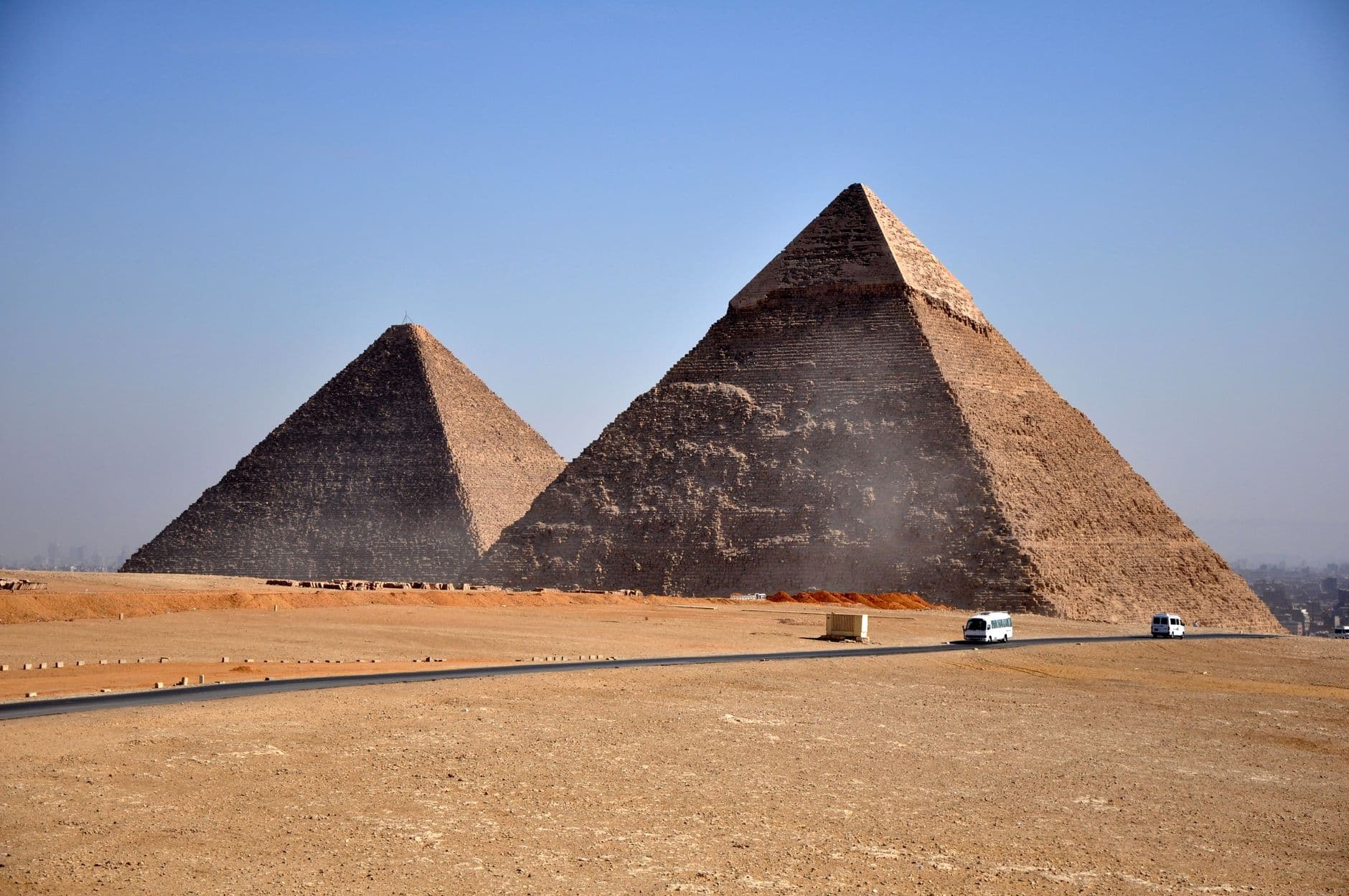
The Giza plateau opens early, and the difference between arriving at opening and arriving mid-morning is not subtle. In that first hour, the light comes in low and warm across the desert, the crowds are still thin, and the pyramids themselves take on a softness that midday sun flattens out completely. A camel or horse silhouette against that light, rider and animal both rimmed in gold with the pyramids stacked behind them, is one of the most recognizable Egypt images on the internet right now — and it only exists because someone was there before the heat and the crowds.
The Flying Dress: Egypt's Most Viral Photo Format
If one single image format explains Egypt's current moment on Instagram and TikTok, it's the flying dress. A model in a dress with an enormous, deliberately oversized train stands against the desert or the pyramids while the fabric is caught by the wind, or lifted and held by an assistant just out of frame, so it billows and streams across the shot like a wave frozen mid-motion. Against the ochre of the Giza plateau or the pale dunes of Fayoum, the color and movement of the dress against all that stillness is what makes the photo stop people scrolling — it's dramatic in a way a standard portrait simply isn't.
It looks effortless in the final image, which is exactly why it's so easy to get wrong without help. The fabric has to be positioned and held at the right moment relative to the wind and the shutter, the model's pose has to work with the movement rather than against it, and the photographer needs to be shooting from the angle and distance that lets the dress actually read against the landscape instead of collapsing into a shapeless blur. Our flying dress photoshoot handles all of that — the dress itself, an assistant to manage the fabric, and a photographer who knows exactly when the wind and the light are lined up to fire the shutter. It's the difference between a photo you attempt and a photo you actually get.
See the Flying Dress in Action
A professional photographer, the right light, and a dress made to catch the desert wind — this is how the shot actually happens.
Book the Flying Dress PhotoshootFayoum's Dunes: The Desert Backdrop Fewer People Know About
Fayoum sits under two hours from Cairo and offers a version of the Sahara that most visitors never see, because it isn't on the standard Cairo–Luxor–Aswan route. Its dunes roll in soft, unbroken lines, uninterrupted by roads, buildings, or other tourists in a way that's genuinely hard to find near a major city. That emptiness is exactly what makes it work as a photo location — a single figure or a flying dress against Fayoum's dunes reads as pure desert, without the pyramids or a skyline pulling the eye elsewhere. It's become a quiet favorite for exactly the kind of dramatic, wind-and-fabric shots that do well on Instagram and TikTok, precisely because it offers a blank, honest desert canvas that Giza, with its structures and its crowds, can't.
Old Cairo's Rooftops and the Skyline Nobody Photographs Enough
Cairo's skyline rarely gets the credit its landscape does, but seen from the right rooftop over Islamic Cairo — minarets stacked across the frame, the call to prayer rolling out over rooftops as the light goes orange — it's one of the more underused photo opportunities in the country. Most visitors move through Old Cairo at street level, through Khan el-Khalili's lanes and past its mosques, without ever going up. A rooftop view during the last hour of light turns that same neighborhood into something closer to a genuine skyline shot, dense with minarets and domes instead of towers, and it's a format that reads as distinctly Cairo rather than as a generic city view.
A Pyramids Photoshoot Done Properly
Beyond the flying dress specifically, a dedicated pyramids photoshoot with a professional photographer changes the outcome in ways that go beyond just having a nicer camera. Timing is the biggest factor — knowing which hour puts the sun behind you rather than washing out the frame, and which angle avoids the crowd of tour buses that gathers by mid-morning. A local photographer who shoots at Giza regularly also knows the specific vantage points that put the pyramids at their most dramatic scale, rather than the flat, straight-on angle most visitors default to because it's the first view they reach.
There's also a simple logistics gap that's easy to underestimate: someone showing up alone with a phone is managing their own posing, their own framing, and the site's crowds and security all at once, usually in the span of a few rushed minutes. A guided shoot removes all of that — the photographer handles the technical side and the direction, so the visit becomes about getting the shot rather than fighting for it.
Horseback and Camel Silhouettes Near the Plateau
- A running or jumping horse against the pyramids, caught mid-stride, is one of the more technically demanding shots on this list — it requires a photographer who can time the shutter to the animal's motion, not just point and hope
- Camel silhouettes work best in that same early morning window, when the low sun turns rider and animal into a clean, dark outline against a warm sky rather than a washed-out midday shape
- Both work far better with a handler experienced in working with tourists and photographers, since a nervous or poorly positioned animal ruins the shot regardless of how good the light is
Golden Hour on the Nile
The Nile at sunset does a version of what the desert does at sunrise — it turns a familiar view into something with real depth, the water picking up color from the sky and felucca sails catching the last light as they drift past. It photographs well from a bridge, a corniche-side café, or from on the water itself, and it's one of the few Egypt shots that doesn't require any special access or planning beyond simply being there at the right time of day.
Frequently Asked Questions
Early morning, right at opening, gives the warmest light and the thinnest crowds. Late afternoon into sunset is the second-best window — later light again, though the crowd tends to be heavier than at dawn.
A photoshoot using an oversized, flowing dress that's caught by the wind or lifted by an assistant so it billows dramatically in frame, usually shot against a desert or monument backdrop like the pyramids or the Fayoum dunes. It's become one of the most recognizable Egypt photo formats on Instagram and TikTok.
You can absolutely bring a phone, but the results differ a lot. A professional who shoots at Giza regularly knows the timing, the angles that avoid crowds, and how to work with light that changes fast — that knowledge is most of what separates a tourist snapshot from a shareable photo.
Fayoum is the standout alternative, with wide, uninterrupted dunes under two hours from Cairo. It gives a purer desert backdrop than Giza, without structures or crowds in frame.
Yes, particularly from a rooftop at golden hour, where the minarets and domes of Islamic Cairo stack into a genuine skyline shot. Street level is atmospheric too, but the rooftop view is the one most visitors miss.
Egypt's most photographed moments right now aren't secret locations — they're familiar places shot at the right hour, from the right angle, with someone who knows both. That's really the whole difference between a photo you take and a photo you plan for.
Plan Your Own Pyramids Shoot
Sunrise timing, a professional photographer, and full access — this is the difference between a tourist photo and a portfolio one.
Book the Pyramids PhotoshootWhere This Takes You
Fayoum: The Beautiful Nature of Egypt
Waterfalls, desert lakes, and Egypt's quieter, greener side.
Continue Exploring
Travel Guides
The Best Photo Spots in Egypt — and Which Ones to Book a Shoot At
Where the light, the angle, and the crowd size line up — and which of these locations you can book a produced photoshoot at rather than shooting yourself.
Travel Guides
Photographing Egypt: What Actually Helps
Timing, light, and a few practical notes for getting better photos at Egypt's major sites.
Travel Guides
Why Egypt Could Be One of the World's Most Unexpected Romantic Destinations
Destination proposals and honeymoons keep growing as a travel category, and Egypt is quietly becoming one of its most unexpected entries — pyramids at sunset, private Nile sails, and rooftops built for exactly this.