
Travel Guides
What If You Took a Digital Detox in Egypt?
No signal in the Sahara, sunrise over a 3,000-year-old temple, a night sky without a single glowing screen in sight. Here's what an intentional digital detox in Egypt actually looks like.
Screen-time reports have become a genre of their own bad news — the average person now checks a phone well over a hundred times a day, and a growing body of research ties that constant low-level connectivity to measurably worse sleep, attention, and mood. The response, for a meaningful slice of travelers, hasn't been another app that promises to fix the problem. It's been leaving the problem's habitat entirely: booking trips built around places where a phone simply can't do very much, and treating that limitation as the whole point rather than an inconvenience to work around.
"Digital detox" retreats have become their own travel category as a result — cabins in Scandinavia with no wifi by design, meditation centers that lock phones in a safe at check-in, entire resorts marketed on the promise of silence. Egypt rarely comes up in that conversation, which is a genuine gap, because large parts of the country already have exactly what those retreats are trying to manufacture. It's just not marketed that way, because for the people who live there, it was never a wellness feature to begin with — it's simply what the desert and the river have always been like.
Where the Signal Actually Runs Out
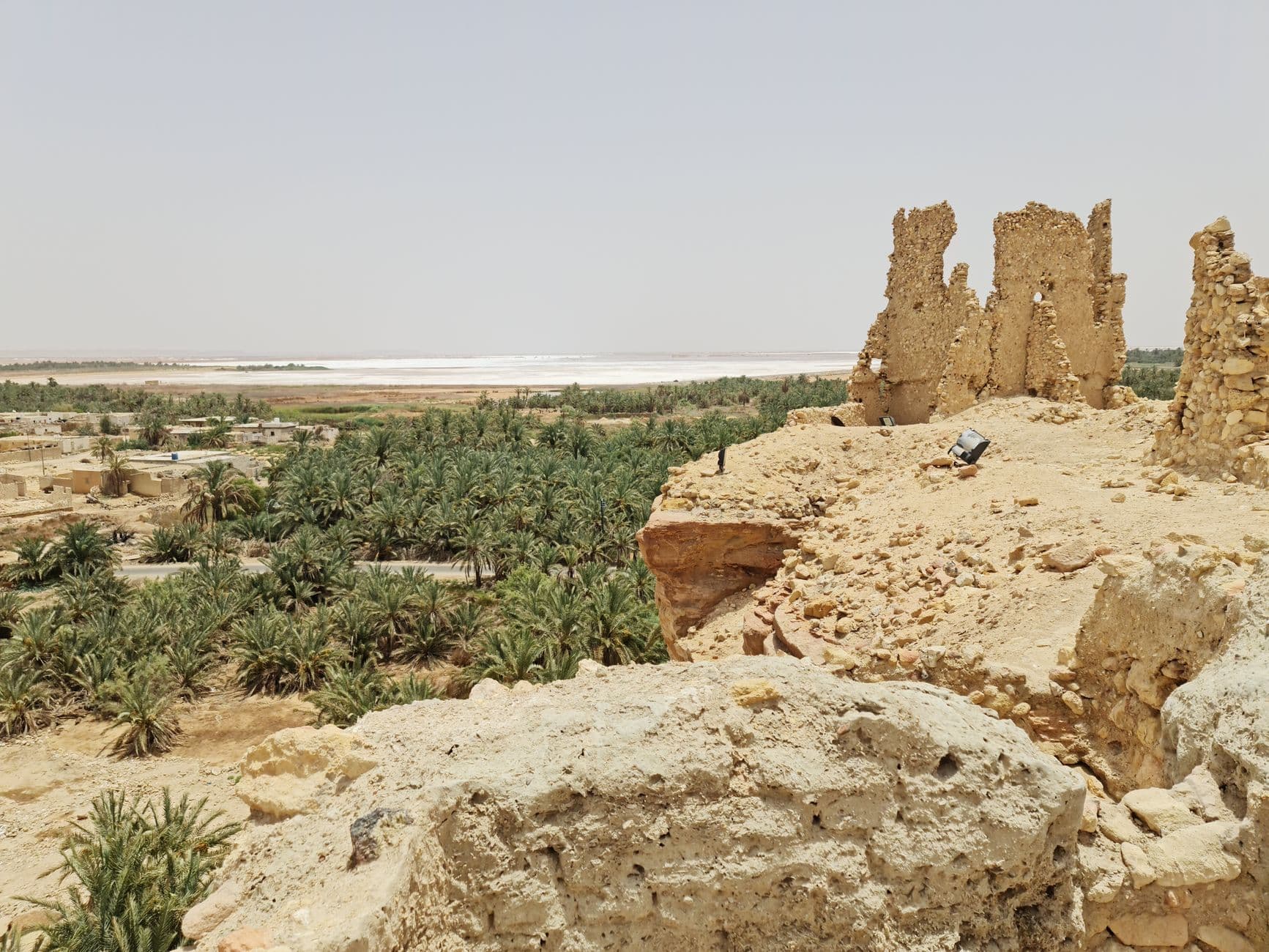
In most of Cairo, Luxor, or a Red Sea resort town, connectivity is fine — you'll get 4G at your hotel and probably at most of the sites in between. That changes fast once you head into the Western Desert. Coverage in Siwa is patchy at best and disappears entirely once you're out among the dunes of the Great Sand Sea; the same goes for stretches of the White Desert near Bahariya, and for the deeper reaches of a Fayoum desert excursion once you're off the paved road. This isn't framed as a feature by most tour operators — it's simply a fact of the terrain, the same reason satellite phones exist for serious desert expeditions. But for a traveler who's been trying and failing to put their own phone down at home, that patchiness does the job for them, without requiring a single ounce of willpower.
A Night Sky With Nothing Competing for Your Attention
Take away the notifications and what's left, at night in the desert, is a sky with an unusual amount of detail in it. Egypt's Western Desert sits far enough from any major city's light pollution that the Milky Way is visible to the naked eye on a clear night — not a faint smudge, but a genuinely wide band across the sky. A quad-biking and stargazing evening in the dunes near Cairo builds this in deliberately, pairing an adrenaline ride into the sand at sunset with a telescope session once the sky is fully dark; a night camping in the White Desert or out in Siwa gets you the same thing over a longer, slower stretch of time, without a screen anywhere nearby to compete with it.
Sunrise Before the Crowds and the Notifications Both Arrive
There's a particular kind of quiet that exists at a major Egyptian temple in the twenty minutes before opening, when the site is still empty and the light is still low. Watching the sun come up over Karnak's columns or the Valley of the Kings' cliffs, before a single tour bus has pulled in, is as close as a monument-heavy itinerary gets to a meditative moment — and because it happens early enough that most people's phones are still on the nightstand, it tends to stay that way for longer than you'd expect.
The Nile at the Pace of a Sail, Not an Engine
A traditional felucca — Egypt's classic wooden sailboat, still used on the Nile much as it has been for centuries — runs on wind, not a motor, which means no engine noise, no scheduled stops, and generally no wifi to speak of. An hour or two on one, drifting past the riverbank at whatever pace the wind allows, is a small, easy way to build genuine stillness into a trip that otherwise moves at a temple-a-day pace. It's not marketed as a wellness activity. It's just what sailing a felucca has always been.
The boats themselves are simple by design — a wide wooden hull, a single tall sail, a bench running along the sides, nothing that requires a plug or a password. Feluccas have carried goods and passengers on the Nile for centuries, long before anyone thought to describe silence as a luxury, and the version you sail today isn't a recreation of that history so much as a continuation of it. There's no set route or schedule the way a cruise ship runs one; the boat goes where the wind lets it, and a good captain reads that wind rather than fighting it. It tends to be the moment on a longer Egypt itinerary that travelers mention afterward with the most surprise — not because it was the most dramatic thing they saw, but because it was the only stretch of the trip with nothing scheduled inside it at all.
Putting Together a Trip Built Around This
None of this requires restructuring an entire Egypt itinerary around the word "detox." It works better as a deliberate stretch built into a longer trip — a couple of days in the Western Desert or Siwa slotted in after the more scheduled, sight-heavy days in Cairo and Luxor, so the contrast actually registers. Arriving in the desert straight off a packed few days of temples and traffic makes the quiet land differently than it would as the very first stop on a trip, before there's anything to unplug from yet.
A workable shape for this: a few days on the standard Cairo–Luxor–Aswan route to see the sites that brought you to Egypt in the first place, then two or three days pointed at the Western Desert or Siwa specifically, with a felucca sail or an early temple visit worked in on either end as a smaller, easier version of the same idea. You don't need to choose between the monuments and the quiet. The trip works better when both are in it.
Good to Know
None of this requires telling your hotel or your travel companions you're "doing a detox." Most of Egypt's Western Desert and its quieter stretches of Nile simply don't have reliable signal — the disconnection happens on its own, which for a lot of travelers is easier to actually stick to than a deliberate phone-free pledge.
What to Actually Plan Around
A few practical notes if you're building a trip with this in mind, rather than stumbling into it by accident:
- Download offline maps and any translation apps before heading into Siwa or the White Desert — signal there is genuinely unreliable, not just slow
- Tell anyone who needs to reach you in advance that you'll be unreachable for a stretch, rather than explaining it in the moment
- Bring a physical book, journal, or camera that isn't your phone — the appeal fades fast if you're just staring at the same device with the signal bars grayed out
- Pair a desert night with a felucca sail or an early temple visit rather than one alone, so the unplugged stretch of the trip runs longer than a single evening
- Charge everything before you leave signal range — some desert camps run on generators with limited outlet access
Frequently Asked Questions
Coverage is inconsistent once you're well outside major towns. Siwa Oasis and the Great Sand Sea, the deeper parts of the White Desert near Bahariya, and stretches of the Fayoum desert away from the paved road all commonly lose signal, while Cairo, Luxor, and the main Red Sea resort towns stay well connected.
Yes — it's one of the more remote inhabited places in Egypt, roughly nine to ten hours from Cairo by road, with patchy signal in town and none at all once you're out among the dunes, plus genuinely dark night skies.
A dedicated quad-biking and stargazing evening in the desert dunes near Cairo, or an overnight camp in the White Desert or Siwa, all get you well clear of city light pollution — the White Desert and Siwa options add more distance and darker skies, at the cost of a longer trip.
Yes, particularly on a shorter, unhurried sail rather than a rushed group stop — the boat genuinely runs on wind, not an engine, and an hour or two adrift on the river is a real change of pace, not a staged photo op.
Even one or two days built around a desert night and a Nile sail makes a noticeable difference. A dedicated Siwa or White Desert trip, at three days or two days respectively, gives the disconnection more room to actually settle in.
None of this is marketed as wellness travel in Egypt, and that's arguably why it works as well as it does — nobody's trying to sell you on the silence, it's just genuinely there, in the parts of the country that were never built around a signal tower in the first place. A phone that stops working somewhere past Siwa's edge of town isn't a flaw in the trip. For a lot of travelers, it's the best part of it.
Go Somewhere the Signal Can't Follow
A night in the Siwa Oasis or the Western Desert is as close to fully disconnecting as travel gets.
Explore the Siwa Oasis TripWhere This Takes You
Desert Dreams: Siwa Oasis
Egypt's most remote oasis — salt lakes, dunes, and starlit skies.
Fayoum & Wadi El Rayan Waterfalls Tour
Egypt's only waterfalls, plus a lake known for windsurfing and desert dunes.
Continue Exploring
Culture
Egypt's Ancient Connection to Wellness — And How to Experience It Today
Long before 'wellness travel' was a category, ancient Egyptians were formalizing bathing, oils, and healing rituals into daily life. Here's that history, and how to find its modern equivalent along the Red Sea and in the desert.
Travel Guides
Siwa Oasis: Egypt's Most Remote Escape
A distinct Berber culture, salt lakes, and one of the quietest corners of Egypt's Western Desert.
Travel Guides
Is the White Desert Worth Visiting?
Chalk formations carved by wind into shapes unlike anything else in Egypt, with a night of camping under some of the darkest skies in the country — here's what it actually involves.