
Travel Guides
What Does Luxury Travel in Egypt Actually Look Like?
Luxury travel has moved past thread counts toward private access and personalization. In Egypt, that looks like a private Nile sail, a guide who knows which door to knock on, and a temple with no one else in it.
Luxury travel has been quietly redefining itself for a decade, and the shift has picked up real speed the last few years. Thread count, marble lobbies, a bigger suite — none of that has disappeared, but it's stopped being the thing that actually distinguishes a luxury trip. What's replaced it is access: the door that opens before anyone else's does, the meal cooked specifically for you rather than plated from a set menu, the experience that exists in exactly one version because it was built around one traveler or one small group. Travelers with the means to buy anything are increasingly buying stories and moments instead of square footage.
That shift shows up everywhere from private after-hours museum tours in London to one-of-one culinary experiences in Tokyo. It rewards destinations that can offer genuine access and genuine personalization, not just a nicer version of the standard package. And it points, more directly than most people expect, at Egypt.
Why Egypt Is a Genuinely Interesting Answer to This
Egypt has always had the raw material for this kind of luxury — monuments that draw crowds by the thousands, a river that's been sailed for millennia, a desert that goes silent the moment you're a few miles outside a city. What's changed is how deliberately that raw material can now be arranged around one traveler instead of a bus tour. A private yacht instead of a shared multi-cabin cruise ship. A temple entered before the day's general admission crowd arrives. A guide who isn't reciting a script to thirty people but having an actual conversation with you about what you're standing in front of. This is what luxury travel in Egypt actually looks like in 2026 — not a nicer hotel room layered on top of the same group experience, but a genuinely different shape of trip.
A Private Vessel at Golden Hour, No Other Boat in Sight
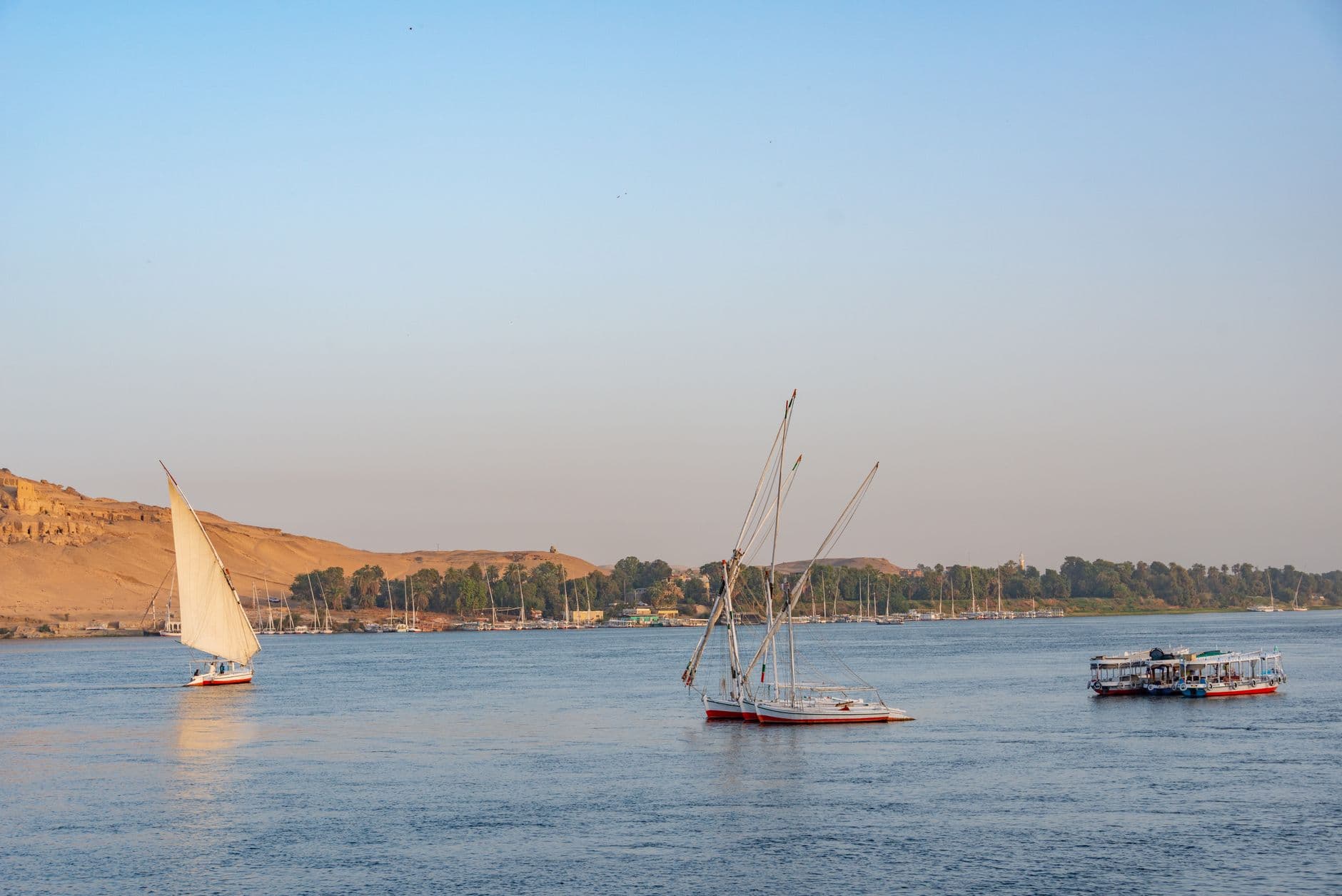
Picture the Nile at sunset from a private felucca or a chartered yacht, with the river to yourselves rather than sharing the view with the deck of a hundred-cabin cruise ship anchored nearby. That's not an exaggeration of what's available — it's a straightforward booking decision. A private yacht or a traditional dahabiya sailboat changes the entire rhythm of the river: meals happen when you want them, the boat can hold position at the exact bend in the river where the light is best, and there's no fixed schedule dictating when you have to be back on board. For travelers who've done a standard Nile cruise before, this is usually the single most dramatic upgrade available anywhere in an Egypt itinerary.
Entering a Temple Before the Crowds Do
The single biggest thing separating a luxury Egypt itinerary from a standard one has less to do with comfort and more to do with timing. Karnak at eight in the morning, with the light still low and gold across the columns of the Great Hypostyle Hall and no tour groups yet, is close to a different site than Karnak at noon. Abu Simbel at dawn, ahead of the coach buses that arrive by mid-morning, gives the colossal statues of Ramses II a stillness that simply isn't available a few hours later. This kind of early or after-hours access is arranged, not accidental — it's one of the clearest examples of what the modern luxury traveler is actually paying for: not a better view of the same thing, but the same thing without anyone else in the frame.
A Trip Documented, Not Just Lived
One of the more distinctive luxury trends globally is travelers investing in having their trip properly captured — a private photographer who understands both the location and how to work with a couple or a family, rather than a handful of phone photos taken in passing. Egypt is an unusually rewarding place for this, given the scale and drama of the backdrops available, and it's a natural, non-pushy fit for what we do at Egypt Eye: our photoshoot experiences, including the flying dress shoots set against the Pyramids or the desert, exist for exactly this reason. A trip built around genuine access and a slower pace is worth having images that actually match how it felt, not snapshots grabbed between stops on a group itinerary.
Dining With the River as the View
Fine dining in Egypt's luxury tier increasingly means a table set specifically for the moment — dinner on a private yacht deck as the sun drops behind the west bank palms, a meal arranged at a riverside property with the Nile itself as the backdrop rather than a hotel dining room. It's a small detail against the scale of the Pyramids or Abu Simbel, but it's often the part of a luxury trip that travelers remember most specifically afterward, because it's the moment the trip stops being about moving between sites and starts being about simply being there.
A Hot Air Balloon at Dawn, and Why the Timing Matters
A sunrise hot air balloon over Luxor's West Bank is one of the few experiences in Egypt that's genuinely hard to over-schedule or rush, and it's a good example of how the luxury version of an experience isn't really a different experience at all — it's the same balloon ride with the logistics handled properly. Pairing it with a private East Bank visit the same morning, timed so the balloon lands and the day's touring begins before the heat and the crowds build, turns two separate bookings into one continuous, well-sequenced morning instead of two disconnected activities competing for the same few hours.
This is where the modern definition of luxury travel shows up most clearly in the details rather than the headline experiences: not just booking the balloon ride, but the person managing the sequencing so nothing about the morning feels rushed or coordinated on the fly. It's a small thing on paper and a large thing in how the morning actually feels.
The Dahabiya Alternative
A traditional dahabiya — a wide-sailed, wind-powered boat that carries a fraction of a standard cruise ship's passengers — is worth understanding as its own category, not just a fancier cabin. It moves slower, stops differently, and turns the Nile crossing itself into one of the trip's best experiences rather than transport between two better-known stops.
What This Adds Up To
- A private felucca or yacht at golden hour, with no other vessel sharing the view
- Early or after-hours entry at major sites — Karnak, the Pyramid interior, Abu Simbel — ahead of the general crowd
- A dedicated Egyptologist guiding just you or your group, not a script delivered to thirty strangers
- A private photographer capturing the trip itself, including a flying dress or portrait shoot at an iconic backdrop
- A dahabiya sail as the slower, quieter alternative to a standard multi-cabin Nile cruise ship
- Meals arranged around the moment — a Nile-view dinner rather than a fixed hotel restaurant seating
This is the experiential side of the picture. If it's the logistics you're weighing — how the hotel tier, the private vehicle, and the daily schedule actually change on a higher-end itinerary — our companion piece, A Luxury Egypt Trip: What Actually Changes, covers that ground directly rather than repeating it here.
Frequently Asked Questions
Access and timing above almost everything else — entering major sites before the general crowd arrives, sailing the Nile privately rather than on a shared cruise ship, and having a dedicated guide whose pace is set entirely by your interest, not a group's.
A private motor yacht is faster and more schedule-flexible; a dahabiya is a traditional wind-powered sailboat, slower and quieter, that trades speed for a genuinely different, more immersive pace on the river. Both are private-vessel alternatives to a standard multi-cabin cruise ship.
Yes — photoshoot experiences, including flying dress shoots at the Pyramids or in the desert, are a genuine and increasingly popular part of a luxury Egypt itinerary, not an add-on gimmick.
It's a real, arrangeable part of a private itinerary — dawn arrivals ahead of the coach-tour crowds at Abu Simbel, or entry to Karnak before general opening, are standard requests for a privately guided trip.
Several months out is safest, particularly for peak season (December through February), since the number of private vessels available for charter is far smaller than the standard cruise fleet.
Luxury travel worldwide has moved toward access, personalization, and story over square footage and thread count — and Egypt, with its scale of monuments and its river running through the middle of it all, turns out to be one of the more natural places for that shift to land. The upgrade isn't a nicer room. It's a temple with no one else in it, a boat with no wake but your own, and a trip built specifically around you.
Reserve the Private Nile Experience
A private yacht, your own schedule, and a crew that works around you — this is what a Nile cruise looks like at the top end.
Reserve the Private Nile YachtWhere This Takes You
Private Yacht Nile Cruise: Luxor to Aswan
The same route as a standard Nile cruise, but the boat is yours alone.
10-Day Private & Luxurious Trip
The full country, at a private, unhurried, five-star pace.
Continue Exploring
Travel Guides
A Luxury Egypt Trip: What Actually Changes
What a higher-end Egypt itinerary actually buys you, beyond the obvious hotel upgrade — timing, access, a private Nile vessel, and a schedule built around you.
Travel Guides
How Much Does an Egypt Trip Really Cost in 2026?
Travel costs are climbing worldwide. Here's what an Egypt trip actually costs in 2026, broken down by accommodation, transport, food, and experiences — and where the real value is.